






BSRIA collaborates to establish common definition of Statutory in workplace and facilities management

BSRIA is pleased to announce its role in a major collaborative effort to establish a standard definition of "statutory" within the workplace and facilities management (WFM) sector. This initiative, in partnership with SFG20 (part of the Building Engineering Services Association (BESA)), the Chartered Institution of Building Services Engineers (CIBSE), and the Institute of Workplace and Facilities Management (IWFM), aims to standardise the interpretation and application of statutory requirements across the industry.
The agreement, facilitated by IWFM’s Procurement and Contract Management Special Interest Group (SIG), addresses the need for consistency in WFM contracts. Historically, varied interpretations of statutory requirements have led to compliance issues and potential risks of non-compliance.

The agreed definition of "statutory" encompasses anything required by primary legislation, such as Acts of Parliament, and secondary legislation, like Statutory Instruments. It also includes specific activities outlined in government guidance and Approved Codes of Practice (ACoPs) from agencies like the Health and Safety Executive (HSE), as well as industry standards and guidance from professional bodies.
This unified definition aims to raise standards, reduce ambiguity in contractual specifications, and ensure properties consistently meet statutory requirements. BSRIA is honoured to contribute to this important initiative, supporting the industry in achieving clear and consistent compliance standards.
The full statement defining "statutory" is as follows:
"The term 'statutory' denotes anything required by primary legislation such as Acts of Parliament and secondary legislation such as Statutory Instruments (including Regulations). When working to achieve statutory compliance, primary and secondary legislation often focuses on general outcomes rather than prescribing specific activities. The specific activities required to meet statutory compliance may, therefore, be included in government guidance and Approved Codes of Practice (ACoPs) published by agencies such as the Health and Safety Executive (HSE), or other industry standards and/or guidance (BSI standards, publications by trade associations and professional bodies, etc). In the absence of a traceable reference to legislation, following industry standards and/or guidance may assist in discharging duties under the statutory requirements. For example: in relation to electrical installations, The Health and Safety at Work etc. Act 1974 led to the Electricity at Work Regulations 1989. This, in turn, is supported by the HSE issued guidance note HSR25 which also references British Standard 7671, which is supported by an on-site guide."

This article appears on the BSRIA news and blog site as 'BSRIA Collaborates to Establish Common Definition of "Statutory" in Workplace and Facilities Management' dated May 2024.
--BSRIA
[edit] Related articles on Designing Buildings
- BSRIA articles.
- Non-statutory consultees for planning permission.
- Non statutory consultees
- Statutory.
- Statutory approvals for buildings.
- Statutory authorities.
- Statutory consultee.
- Statutory declaration excluding security of tenure.
- Statutory formulae for rating valuation.
- Statutory instruments.
- Statutory obligations.
- Statutory permissions.
- Statutory planning notices
- Statutory Procedures for Planning.
- Statutory sick pay.
- Statutory undertakers.
Featured articles and news
Building Control Independent Panel final report
A precis of a key report lead by Dame Hackitt with full recomendations and link to the government response.
Guide to ISO 19650 for Architecture Firms (2026)
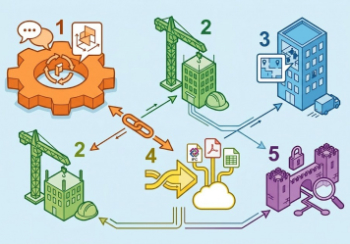
A user gives their low down.

A UK training and membership provider for mould remediation professionals.
Building Safety recap April, 2026
A short and longer run-through of the month, with links to further information and sources.

CIAT May 2026 briefing.

Independent NSI and BAFE study exploring how organisations are changing the way they buy fire safety services.

From medieval scribes to modern word art.

ECA welcomes crackdown on late payment and push for clean energy, whilst CIOB seek fixed cladding removal timeframes.
Cyber Security in the Built Environment
Protecting projects, data, and digital assets: A CIOB Academy TIS.
Managing competence in the built environment
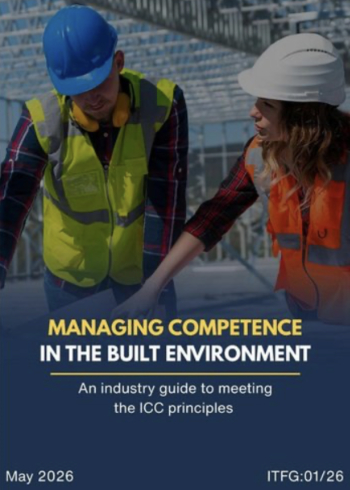
ITFG publishes new industry guide on how to meet the ICC principles.
The UK's campaign to reduce noise pollution: Mythbusting, articles and topic guides.
Setting Expectations on Competence Management
Industry Competence Committee.
New Scottish and Welsh governments
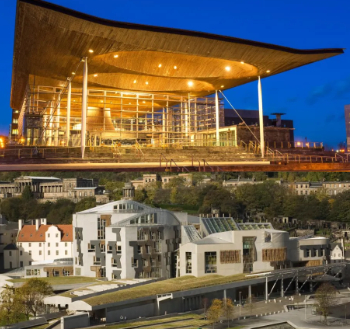
CIOB stresses importance of construction after new parliament elections.
The sad story of Derby Hippodrome
An historic building left to decay.

ECA, JIB and JTL back Fabian Society call to invest in skills for a stronger built environment workforce.